 +256 703186428
  +256 760463258
  info@mzangasafaris.com | michaelwamala4@gmail.com

Queen Elizabeth National Park
Queen Elizabeth National Park is Uganda’s most visited and celebrated wildlife conservation area. Located in western Uganda, the park spans the districts of Kamwenge, Rukungiri, Rubirizi, and Kasese. Covering approximately 1,978 square kilometers, it is one of the country’s largest protected areas and forms part of a vast ecosystem that extends into neighboring conservation areas, including Virunga National Park and Kibale National Park. Renowned for its exceptional biodiversity and breathtaking scenery, the park features iconic attractions such as the Kazinga Channel, Kyambura Gorge, Maramagambo Forest, Lake George, and Lake Edward. Its rich wildlife, spectacular landscapes, and diverse safari experiences make it one of Africa’s premier safari destinations.
Established in 1952 as Kazinga National Park, the reserve was later renamed Queen Elizabeth National Park in honor of a visit by Queen Elizabeth II. The royal visit left a lasting impression and led to the park being named after the British monarch. Unlike many East African parks that experience prolonged dry seasons, Queen Elizabeth National Park benefits from its location within the rain shadow of the Rwenzori Mountains. This unique setting allows the park to remain lush and productive throughout much of the year, supporting abundant wildlife and enhancing its scenic beauty.
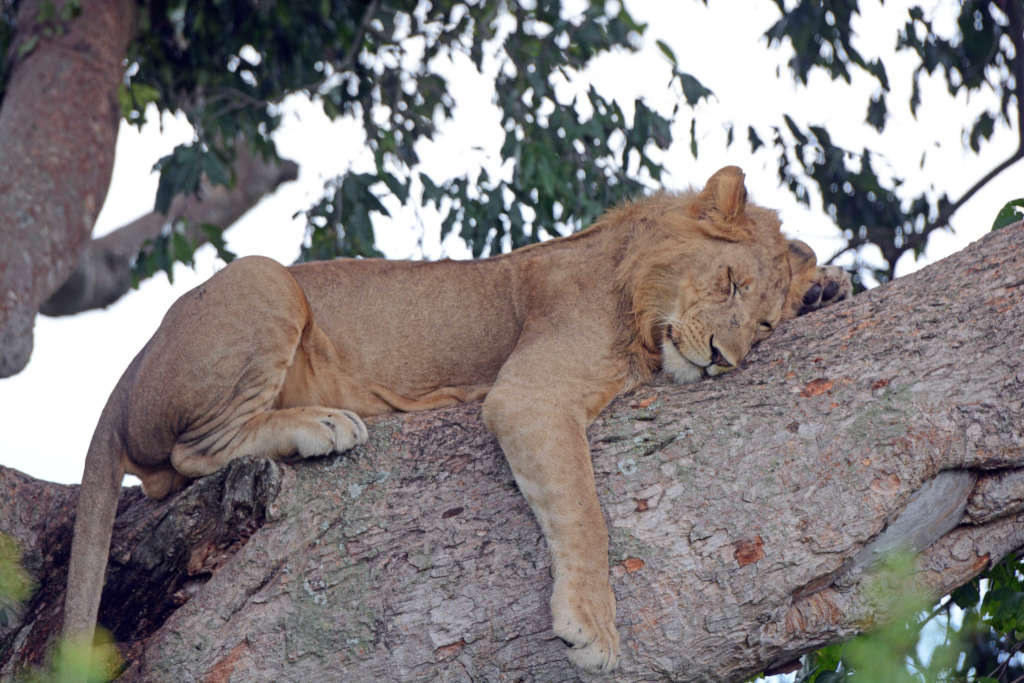
The park is home to more than 95 mammal species, making it one of Uganda’s most diverse wildlife destinations. Visitors can encounter elephants, buffaloes, hippos, leopards, waterbucks, Uganda kobs, warthogs, spotted hyenas, crocodiles, chimpanzees, and black-and-white colobus monkeys. The park is also an important lion conservation area, with the Ishasha sector famous for its rare tree-climbing lions, a behavior observed in only a few places across Africa. Birdlife is equally impressive, with over 490 recorded bird species, attracting birdwatchers and nature enthusiasts from around the world.
Several indigenous communities live around the park, including the Banyankore, Bakiga, and Bakonjo people. The Bakiga and Bakonjo are primarily subsistence farmers, while the Banyankore are traditionally known for cattle keeping. Around Lake Katwe, traditional salt mining remains an important economic activity and cultural heritage. The park is managed by the Uganda Wildlife Authority in collaboration with conservation organizations, researchers, and local communities to ensure sustainable tourism and wildlife conservation. Its strategic location also makes it easy to combine a safari here with gorilla trekking in Bwindi Impenetrable National Park or chimpanzee tracking in Kibale National Park.
Queen Elizabeth National Park can be accessed by both road and air. By road, the journey from Kampala via Mbarara covers approximately 420 kilometers and takes about eight hours. Travelers from Fort Portal can reach the park in about four hours, while those coming from Lake Mburo National Park typically take around six hours. Although the main highways are paved, roads within the park are mostly murram and hard-soil tracks. Public buses operate between Kampala and Kasese, but private transport is generally required to access the park’s safari areas. For convenience and a seamless travel experience, many visitors choose to travel with Mzanga Safaris, which provides transportation, accommodation arrangements, experienced guides, and professionally organized safari itineraries. Domestic charter flights are also available from Entebbe International Airport and Kajjansi Airfield to airstrips at Kasese, Mweya, and Ishasha.
Game drives are among the park’s most popular activities. Visitors explore wildlife-rich areas such as the Kasenyi Plains, Ishasha sector, and Katwe Crater region in search of lions, elephants, buffaloes, antelopes, and other wildlife. The Kasenyi Plains are particularly famous for their large populations of Uganda kobs, which attract predators such as lions and hyenas. Night game drives offer an additional opportunity to spot nocturnal animals rarely seen during the day.
A boat cruise along the Kazinga Channel is one of the highlights of any visit. The channel connects Lake George and Lake Edward and supports an extraordinary concentration of wildlife. Visitors commonly observe hippos, crocodiles, elephants, buffaloes, and numerous bird species along its shores, making it one of the best wildlife-viewing experiences in Uganda.
Chimpanzee trekking in Kyambura Gorge, often referred to as the “Valley of Apes,” offers visitors the chance to track a habituated community of chimpanzees within a dramatic forested gorge. The experience combines primate encounters with spectacular scenery and diverse birdlife.
Birdwatching is another major attraction, with nearly 500 recorded species found throughout the park. Popular birding locations include Maramagambo Forest, Kyambura Gorge, the Kazinga Channel, and the crater lakes region. Notable species include the shoebill stork, martial eagle, African skimmer, and greater flamingo.
The Ishasha sector is internationally renowned for its tree-climbing lions, which are often seen resting in the branches of large fig trees. This rare wildlife phenomenon is one of the park’s most sought-after safari experiences and attracts visitors from across the globe.
Nature walks through Maramagambo Forest provide opportunities to discover unique flora and fauna, including primates, birds, bats, and scenic crater lakes. The forest is one of Uganda’s most important tropical ecosystems and offers a refreshing contrast to traditional game drives.
Cultural experiences around the park allow visitors to engage with local communities and learn about their traditions, music, dance, crafts, and daily lifestyles. These encounters provide valuable insights into the cultures that coexist alongside the park’s wildlife.
For a truly unforgettable adventure, hot air balloon safaris offer spectacular sunrise views over the savannah. Floating silently above the landscape provides a unique perspective of the park’s wildlife, crater lakes, and rolling plains.
Queen Elizabeth National Park offers accommodation options to suit every budget and travel style. In the Ishasha sector, Ishasha Wilderness Camp provides comfortable eco-friendly tented accommodation in a peaceful natural setting. Katara Lodge, located near Katunguru Gate, offers stunning views of the surrounding savannah and Lake Edward. Kyambura Gorge Lodge combines luxury accommodations with easy access to chimpanzee trekking activities. Mweya Safari Lodge, situated on the Mweya Peninsula near the Kazinga Channel, remains one of the park’s most established and luxurious safari lodges. Queen Elizabeth Bush Lodge offers comfortable eco-friendly accommodation close to key wildlife viewing areas, while Jacana Safari Lodge provides a tranquil retreat overlooking a scenic crater lake near Maramagambo Forest. Hippo Hill Camp, located near Katwe, offers excellent views of crater lakes and the surrounding savannah landscape.
Queen Elizabeth National Park offers an unforgettable safari experience defined by spectacular landscapes, abundant wildlife, remarkable birdlife, and rich cultural encounters. Whether cruising along the Kazinga Channel, tracking chimpanzees in Kyambura Gorge, searching for tree-climbing lions in Ishasha, or exploring the park’s scenic wilderness, every moment promises adventure and discovery. With excellent accommodation options, convenient transport links, and expertly guided safaris from Mzanga Safaris, Queen Elizabeth National Park continues to stand out as one of Africa’s most captivating and rewarding wildlife destinations.
